Why Perplexity is the Secret Weapon for B2B Organic Traffic
B2B organic traffic is changing. Quietly. Quickly. And if most marketing teams are honest, they’re still playing by yesterday’s rules.
Here’s the thing - Google isn’t the only discovery engine anymore. Buyers don’t just “search.” They ask. They compare. They dig deeper. And that’s exactly where Perplexity is rewriting the playbook.
If you ask seasoned growth marketers who are ahead of the curve, many will say the same thing: Perplexity isn’t just another AI tool. It’s a distribution channel hiding in plain sight.
Let’s unpack why.
Perplexity Isn’t Just Search - It’s Research on Steroids
Traditional search engines give users a list of blue links. Perplexity delivers synthesized answers, backed by citations. That subtle difference changes everything for B2B organic traffic.
Think about a typical B2B buyer. They’re not looking for “best CRM.” They’re asking layered questions like:
- Which CRM integrates with complex ERP systems?
- What are the risks of switching enterprise software mid-contract?
- How does AI improve pipeline forecasting accuracy?
These aren’t surface-level queries. They’re research-driven. And Perplexity thrives in that environment.
It pulls structured insights from authoritative content. It rewards depth. It favors clarity.
In other words - it favors smart B2B brands.
The New SEO Battlefield: Answer Visibility
Ranking #1 used to be the trophy. Now? Being cited inside an AI-generated answer is the real prize.
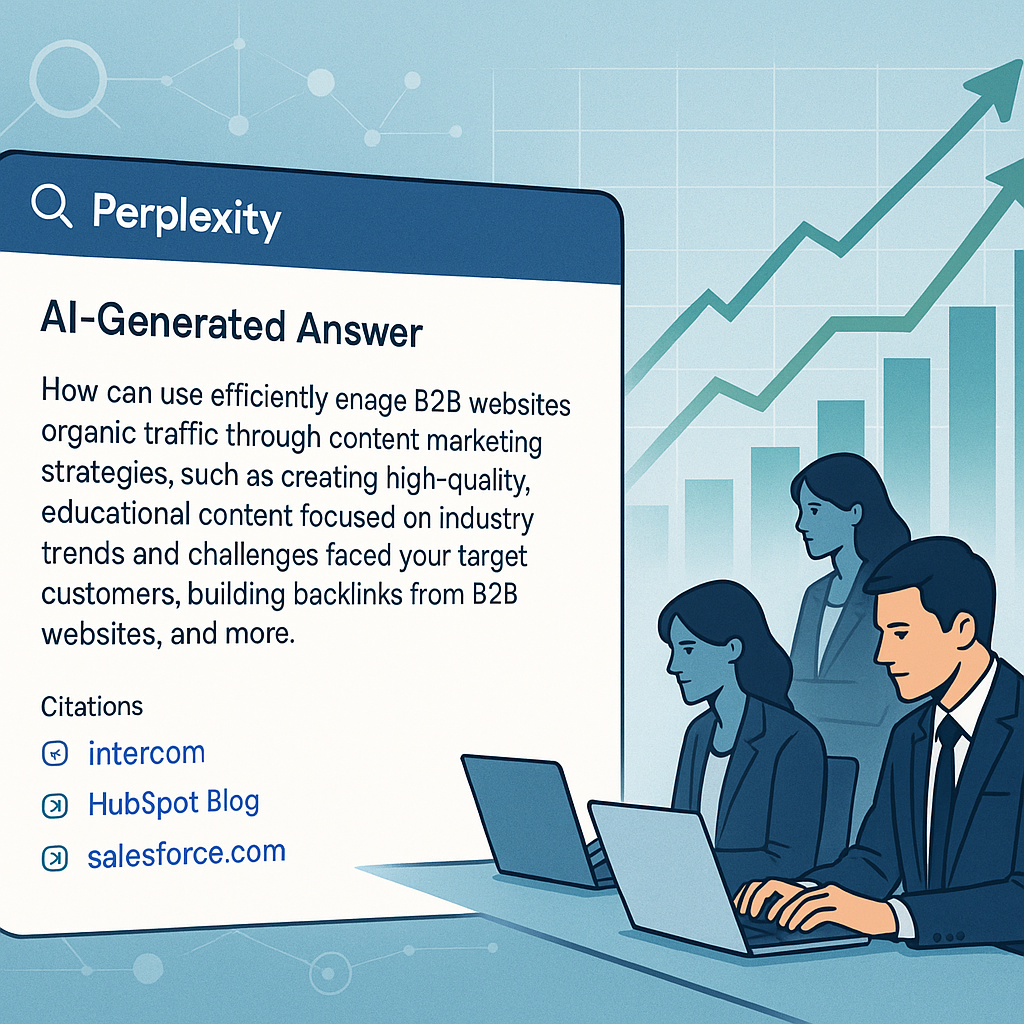
Perplexity surfaces sources directly within its responses. If a brand’s content is clear, data-backed, and structured well, it has a legitimate shot at becoming part of the answer itself.
And that’s powerful.
Because when a decision-maker sees a brand repeatedly referenced in research responses, trust compounds. Authority builds. Familiarity grows.
It’s like being quoted in every industry panel discussion without ever stepping on stage.
Why This Matters for B2B Buyers
B2B purchasing cycles are long. Complex. Political. A CFO, CTO, operations lead - all of them want proof.
Perplexity supports that research process by consolidating insights. So when a company appears consistently in cited sources, it becomes part of the evaluation narrative.
Sounds simple, right?
It’s not. But it is achievable.
Perplexity Rewards Content That Actually Teaches
Here’s a hot take: fluff content is dead in B2B.
Perplexity doesn’t care about keyword stuffing. It prioritizes substance. It looks for pages that genuinely answer questions.
That means:
- Original research
- Clear definitions
- Step-by-step frameworks
- Strong internal logic
- Credible data references
Brands investing in educational assets - think whitepaper-level blog posts - are seeing stronger visibility inside AI-generated answers.
It’s almost like the internet matured overnight.
How to Optimize for Perplexity Without Abandoning Google
No, this isn’t about ditching traditional SEO. That would be reckless.
This is about evolving it.
1. Write for Questions, Not Just Keywords
Instead of targeting “B2B lead generation strategy,” build content around:
- How does B2B lead generation differ from B2C?
- What metrics actually matter in enterprise pipelines?
- Why do most outbound campaigns fail?
Perplexity thrives on natural-language queries. Structured Q&A sections help immensely.
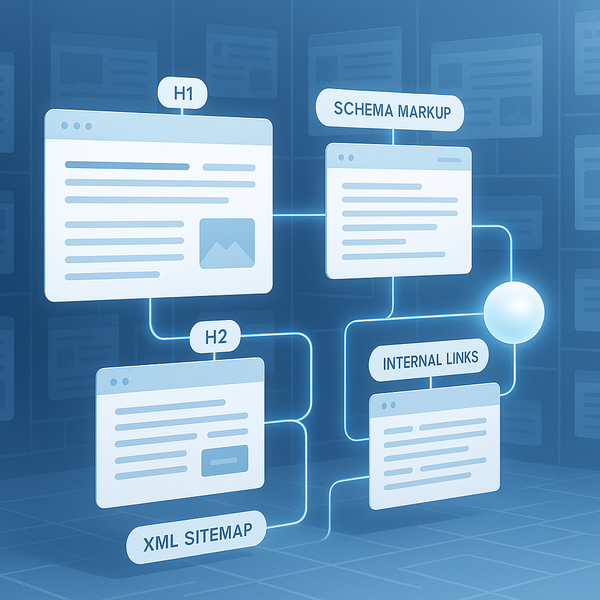
2. Use Clear, Structured Formatting
Messy walls of text don’t win citations.
Clean headings. Bullet points. Logical progression. Concise explanations.
It’s not about writing shorter. It’s about writing smarter.
3. Add Data and Unique Insight
Original statistics increase citation potential. Even internal benchmarks count.
For example, agencies like rapidwombat.com focus heavily on data-driven content frameworks specifically built to perform inside AI-powered search tools. That kind of strategic structure isn’t accidental. It’s engineered.
And engineering beats guessing every time.
Why Perplexity Is a Secret Weapon - Not a Trend
Plenty of tools explode in popularity and disappear just as fast. Remember when everyone said Clubhouse would replace podcasts?
Exactly.
Perplexity feels different because it aligns with how modern buyers behave. They want synthesis. They want sources. They want clarity without clicking 15 tabs.
It acts like a research assistant who never sleeps.
For B2B marketers, that means content either becomes part of the assistant’s knowledge flow - or it becomes invisible.
The Compounding Effect of AI Citations
Here’s something fascinating.
When a brand appears in one AI-generated answer, it often appears again in related queries. That’s because authoritative content tends to cover adjacent topics thoroughly.
It’s a ripple effect.
One strong pillar page can influence dozens of research questions.
That’s leverage. Real leverage.
Common Mistakes B2B Teams Make
Let’s be blunt for a second.
Most companies sabotage their own organic traffic strategy.
- They publish generic listicles.
- They outsource thought leadership to writers with no industry depth.
- They avoid strong opinions to “stay safe.”
- They optimize for algorithms, not humans.
Perplexity exposes weak content instantly. If it can’t extract clear value from a page, it moves on.
No drama. No second chances.
Building a Perplexity-First Content Strategy
So what does a forward-thinking approach look like?
Start With High-Intent B2B Questions
Map out decision-stage concerns. Pricing complexity. Implementation risk. ROI justification.
These are the queries executives actually type.
Create Authoritative Pillar Content
One 3,000-word deep dive beats five shallow blog posts. Depth signals authority. Authority increases citation probability.
Quality scales. Thin content does not.
Update Relentlessly
AI tools value freshness and accuracy. Regular updates keep content competitive.
Stale insights? They fade.
Perplexity and the Future of B2B Organic Traffic
Here’s the bigger picture.
Search is becoming conversational. Discovery is becoming contextual. And organic traffic is becoming multi-channel by default.
Brands that adapt early gain disproportionate rewards.
Think of it like buying prime real estate before a neighborhood explodes. At first, it feels risky. Then everyone wishes they had moved sooner.
Perplexity offers that kind of opportunity right now.
It’s not replacing Google. It’s reshaping how research happens.
B2B marketers who treat it as an afterthought will struggle. Those who integrate it into their organic strategy? They’ll quietly dominate high-intent discovery channels while competitors chase outdated metrics.
And honestly, that’s the real secret weapon.
Not hacks. Not loopholes.
Just smarter, deeper, more useful content - built for how people actually think.