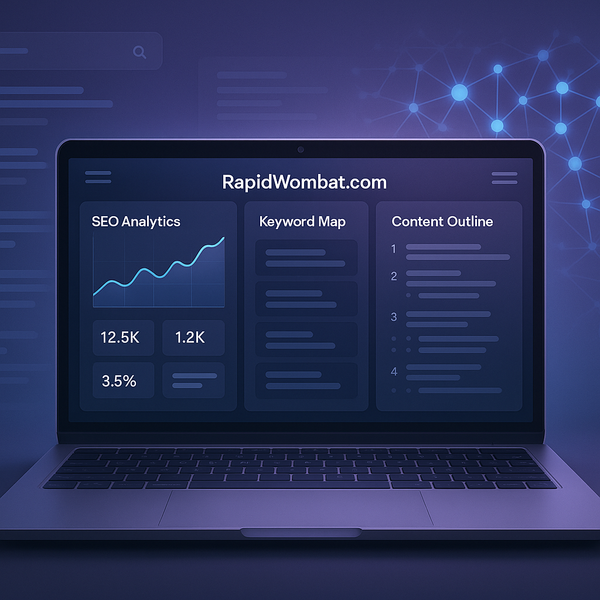
Using RapidWombat to Build a Perplexity-First Content Strategy

Search has changed. Not slowly. Not politely. It flipped the table. Instead of typing stiff keywords into a blank bar, people now ask full questions. They expect context. They want reasoning. They want answers that feel like a conversation, not a database dump. That shift is why a Perplexity-first content strategy matters. And it is exactly where rapidwombat.com steps in. If you ask me, brands that still write only for traditional rankings are playing yesterday’s game. The real opportunity? Crafting material designed to surface inside AI-driven engines like Perplexity - engines that summarize, cite, and synthesize instead of merely listing links. Let’s break down what that actually means.
What Is a Perplexity-First Content Strategy?
A Perplexity-first strategy focuses on creating pages that AI answer engines can easily interpret, trust, and cite. Not trick. Not manipulate. But genuinely understand. Perplexity pulls from reliable, structured, and well-explained sources. It looks for:
- Clear explanations
- Logical structure
- Authoritative tone without fluff
- Direct answers to specific questions
- Strong semantic depth
Sounds simple, right? It isn’t. Most websites still write like they are chasing a keyword density score from 2012. Short paragraphs. Repeated phrases. Surface-level advice. That approach might still rank in some corners of traditional search, but AI engines expect more depth - and more coherence. This is where RapidWombat becomes interesting.
Why Traditional SEO Isn’t Enough Anymore
Traditional SEO focuses on:
- Keyword placement
- Backlinks
- Technical structure
- Metadata optimization
Those still matter. Absolutely. But Perplexity and similar tools evaluate pages differently. They ask: - Does this piece answer the full intent behind a question? - Is it logically organized? - Does it provide context and nuance? - Can it be cited confidently? Think of it like this. Old-school optimization is like building a flashy storefront to attract foot traffic. Perplexity-first strategy is like becoming the expert everyone inside the building consults. One is about visibility. The other is about credibility. And credibility wins long term.
How RapidWombat Powers a Perplexity-First Approach
RapidWombat is built around understanding how AI systems interpret information. It does not just help produce articles - it helps shape structured knowledge assets that machines can parse intelligently. Here’s what sets it apart.
1. Structured Topic Mapping
Perplexity thrives on context clusters. It connects ideas across related themes. RapidWombat analyzes topic relationships and helps build interconnected articles that: - Cover primary themes - Address supporting subtopics - Anticipate related questions - Strengthen semantic relevance Instead of publishing isolated posts, brands create a knowledge ecosystem. And AI engines love ecosystems.
2. Intent-Driven Content Creation
Not all queries are equal. Some users want definitions. Others want comparisons. Some want step-by-step frameworks. RapidWombat identifies search intent patterns and guides the creation process accordingly. That means: - Clear answer blocks - Expanded reasoning sections - Practical applications - Balanced analysis The result? Pages that satisfy both humans and AI summarization systems.
3. Citation-Worthy Formatting
Perplexity cites sources. It looks for clarity. RapidWombat encourages: - Logical heading structures - Bullet lists for quick extraction - Concise definitions followed by depth - Natural language explanations It is not about stuffing terms. It is about making ideas digestible. And when information is digestible, it becomes quotable.
Building the Strategy Step by Step
A Perplexity-first plan is not guesswork. It follows a deliberate sequence. Here is how a brand can use RapidWombat to implement it.
Step 1 - Identify Core Knowledge Pillars
Every company operates around foundational themes. For example: - Product education - Industry trends - Problem-solving guides - Comparative insights RapidWombat helps map those pillars and define the depth required to establish authority. Without pillars, material becomes scattered. With pillars, it becomes strategic.
Step 2 - Expand Into Supporting Clusters
Each pillar should branch into detailed subtopics. If the pillar is "AI marketing," clusters might include: - AI in customer segmentation - Automation tools comparison - Ethical considerations - Data privacy implications Perplexity values comprehensive coverage. When a site covers a topic thoroughly, it signals reliability. It is the difference between a pamphlet and an encyclopedia.
Step 3 - Answer Real Questions Clearly
Here’s a hot take. Many brands overcomplicate their writing because they think complexity equals intelligence. It doesn’t. Clear answers win. RapidWombat structures pages so that they: - Begin with a direct response - Follow with explanation - Add examples - Provide practical takeaways That layered structure mirrors how Perplexity synthesizes information.
Step 4 - Optimize for Semantic Depth
Keyword repetition is outdated. Semantic richness is powerful. Instead of repeating one phrase endlessly, RapidWombat encourages related terminology, contextual expansion, and natural variations. That helps AI systems understand breadth without feeling manipulated. Imagine explaining a topic to a colleague instead of feeding a machine. That is the mindset shift.
What Makes Content “Citable” in AI Search?
This is the million-dollar question. Perplexity selects sources that demonstrate: - Clarity - Authority - Logical progression - Topical depth - Balanced perspective Overly promotional pages struggle here. Thin articles struggle even more. RapidWombat focuses on building materials that feel like reference guides rather than sales brochures. And honestly, that benefits human readers too.
Common Mistakes to Avoid
Even with good tools, strategy can fail if execution slips. Here are frequent missteps:
Ignoring Context
Publishing disconnected posts without internal cohesion weakens authority signals.
Over-Optimizing for One Phrase
Repetition feels robotic. AI systems detect unnatural patterns quickly.
Writing Without Structure
Walls of text discourage both users and summarization engines.
Prioritizing Volume Over Depth
Ten shallow pages rarely outperform one comprehensive guide. RapidWombat counters these problems by keeping strategy anchored in structure and intent.
The Long-Term Advantage
Here is something worth considering. AI-driven discovery is still evolving. That means brands adopting a Perplexity-first approach now gain an early advantage. While competitors chase short-term ranking tricks, forward-thinking teams build authoritative knowledge bases. Over time, those bases become reference points. And when AI tools repeatedly cite a source, credibility compounds. It is like interest in a savings account. Slow at first. Then exponential.
Is Perplexity-First the Future of Search?
No one can predict search perfectly. But patterns are clear. People want synthesized answers. They trust systems that explain reasoning. They value cited material. Perplexity embodies those expectations. So the smarter question becomes: why not prepare for that direction now? RapidWombat offers a structured way to do exactly that - aligning strategy with how AI interprets information rather than clinging to outdated optimization habits. And frankly, that shift feels less like a trend and more like an inevitability.
Final Thoughts on Building Authority in an AI World
A Perplexity-first content strategy is not about gaming algorithms. It is about clarity. It is about depth. It is about becoming the source AI engines trust when summarizing complex questions. RapidWombat provides the framework, mapping, and structural intelligence to make that possible. Instead of guessing what might work, brands can build deliberate, interconnected knowledge systems designed for modern search behavior. Search is no longer a list of blue links. It is a conversation. The brands that learn to speak clearly - and structure their insights thoughtfully - will dominate that conversation. The rest will wonder why traffic feels different. And by then, the shift will already be complete.