The Mid-Market Guide to AI-Driven CMO Replacement

Let’s address the elephant in the boardroom.
Mid-market companies are quietly asking a once-unthinkable question: can an AI-driven system replace a traditional Chief Marketing Officer?
Not assist. Not support. Replace.
If that sounds dramatic, good. It should. Because for growing companies caught between startup scrappiness and enterprise bureaucracy, the stakes are real. Hiring a seasoned CMO costs a small fortune. Keeping one aligned with shifting digital channels? Even harder.
And here’s the hot take - many mid-sized businesses don’t actually need a traditional CMO. They need outcomes. Predictable pipeline. Smarter spend. Sharper positioning. Less guesswork.
That’s where AI-driven marketing leadership enters the picture.
Why the Traditional CMO Model Breaks in Mid-Market Companies
Enterprise corporations can afford experimentation. They have layers of strategy teams, data analysts, brand directors, and performance managers. A CMO there acts like a conductor guiding a full orchestra.
Mid-market firms? They’re often juggling chainsaws.
Revenue between $10M and $250M creates a strange tension. There’s enough complexity to require structure, but not enough margin for bloated leadership overhead. A six-figure executive salary plus bonuses can feel like buying a private jet to commute across town.
Here’s what usually happens:
- The company hires a charismatic marketing leader.
- That leader builds a small internal team.
- Agencies get layered on top.
- Data lives in five dashboards.
- Attribution becomes... interpretive art.
Sound familiar?
Eventually the CEO asks the inevitable question: “What exactly are we getting for this spend?”
And the answers get fuzzy.
What an AI-Driven CMO Replacement Actually Means
Let’s clear something up. An AI-driven CMO replacement isn’t a robot sitting in a corner writing taglines.
It’s a structured system that integrates:
- Data analysis across every channel
- Automated campaign optimization
- Real-time performance modeling
- Predictive budget allocation
- Strategic content orchestration
In other words, it’s decision intelligence layered over execution.
Think of it like replacing a weather forecaster who relies on gut instinct with a satellite network that sees storms forming before clouds gather. One reacts. The other anticipates.
Honestly, the difference feels unfair.
The Shift From Opinion to Evidence
Traditional leadership often depends on experience. Experience is valuable, yes. But it’s also biased. An executive who built growth on trade shows in 2015 may struggle in a world ruled by short-form video and performance ads.
An AI-driven system doesn’t cling to nostalgia. It tracks behavior. It measures conversion signals. It reallocates spend daily, sometimes hourly.
No ego. No pet projects. Just math.
Where Mid-Market Companies Gain the Most
This isn’t about flashy technology. It’s about leverage.
Mid-sized firms benefit in three big ways:
1. Budget Efficiency
Marketing budgets often bleed through inefficiency - duplicated tools, underperforming ads, bloated retainers. AI-driven leadership identifies waste quickly. It shuts down what doesn’t convert and doubles down on what does.
It’s like turning on the lights in a messy garage. Suddenly you see what’s worth keeping.
2. Faster Decision Cycles
Human leadership meets weekly. Sometimes monthly. Data reports arrive after campaigns end.
AI systems process information continuously.
That speed compounds. A 10 percent improvement each month stacks into serious revenue lift over a year.
3. Scalable Strategy
A traditional executive can only oversee so much. As channels multiply - paid search, social ads, email, SEO, partnerships - cognitive overload creeps in.
Machine-led frameworks don’t get tired. They don’t forget to test headlines. They don’t overlook attribution anomalies at 2 a.m.
Consistency becomes automatic.
But Can AI Replace Strategic Vision?
Here’s where skeptics push back.
“Strategy requires intuition.”
“Brand requires emotion.”
“Leadership requires human connection.”
Fair points. Yet mid-market businesses rarely need philosophical brand manifestos. They need clarity on positioning, customer segments, pricing alignment, and demand generation.
An AI-driven CMO replacement doesn’t eliminate human input. It reframes it.
Instead of one executive making sweeping calls, leadership collaborates with a data-backed system that presents tested pathways. The CEO stays involved. Sales feeds insight. Product informs messaging.
The machine becomes the strategist’s co-pilot.
And if you ask many founders privately, they prefer a co-pilot who never sleeps.
How Implementation Actually Works
Adopting an AI-powered marketing leadership model isn’t a plug-and-play fairy tale. It requires structure.
Typically, the process follows a clear arc:
- Audit Everything - Channels, messaging, spend, performance history.
- Centralize Data - Eliminate siloed dashboards.
- Deploy Automation Layers - Campaign testing, budget shifts, audience refinement.
- Install Predictive Models - Forecast revenue impact before scaling.
- Continuously Optimize - Small adjustments, constant refinement.
Companies that attempt this alone often stall. The integration work can feel overwhelming.
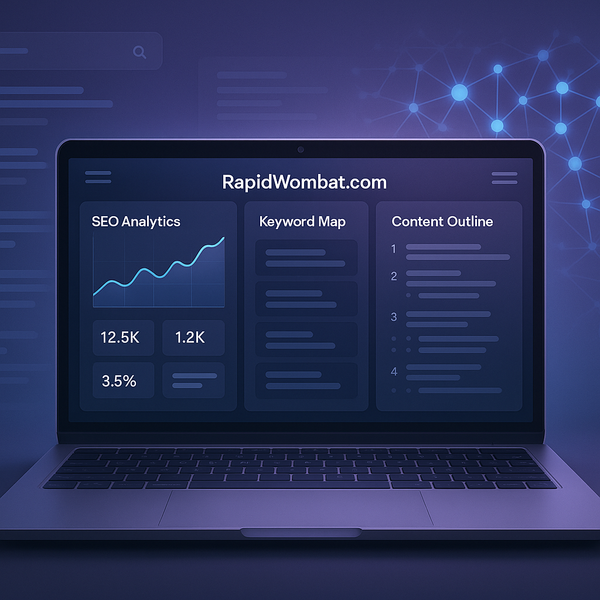
That’s why specialized services like rapidwombat.com exist - to build structured AI-driven marketing leadership frameworks tailored for mid-market growth.
It’s less about software. More about orchestration.
The Cost Comparison No One Talks About
Let’s talk numbers without sugarcoating.
A seasoned CMO can cost:
- $180,000 - $300,000 base salary
- Bonuses and equity
- Support staff
- Agency retainers
Total annual impact? Often north of half a million dollars.
An AI-driven replacement model typically operates at a fraction of that cost while scaling across channels simultaneously.
Is it identical? No.
Is it more measurable? Absolutely.
Risks and Realities
This isn’t magic. There are pitfalls.
- Poor data hygiene leads to flawed outputs.
- Over-automation can dilute brand nuance.
- Internal teams may resist change.
And perhaps the biggest risk - expecting instant transformation.
Even the smartest system needs calibration. Think of it like installing a high-performance engine into an aging car. Without tuning the rest of the vehicle, performance suffers.
Preparation matters.
Who Should Consider an AI-Driven CMO Replacement?
Not everyone.
Early startups still validating product-market fit may benefit more from scrappy experimentation. Massive enterprises may prefer layered executive hierarchies.
But mid-market organizations experiencing these symptoms should pay attention:
- Revenue growth has plateaued.
- Marketing ROI feels unclear.
- Channel expansion overwhelms leadership.
- Budget discussions create friction.
When complexity increases faster than clarity, something has to change.
The Bigger Shift - From Personality to Performance
For decades, marketing leadership revolved around big personalities. Visionary storytellers. Conference keynote speakers. Creative masterminds.
That era isn’t dead, but it’s evolving.
Today, competitive advantage belongs to companies that operationalize intelligence. Systems beat speeches. Testing beats theory.
It’s less Mad Men. More Moneyball.
And mid-market firms, agile enough to pivot yet large enough to invest, sit in a unique sweet spot.
Final Thought
Replacing a CMO with an AI-driven framework once sounded radical. Now it feels pragmatic.
The question isn’t whether machines can lead marketing strategy. It’s whether companies can afford not to leverage them.
Growth doesn’t care about titles. It responds to precision.
Mid-market leaders who understand that will move faster, spend smarter, and scale with fewer blind spots.
And in competitive markets, clarity wins.