Scaling B2B Lead Gen with ChatGPT Search Citations
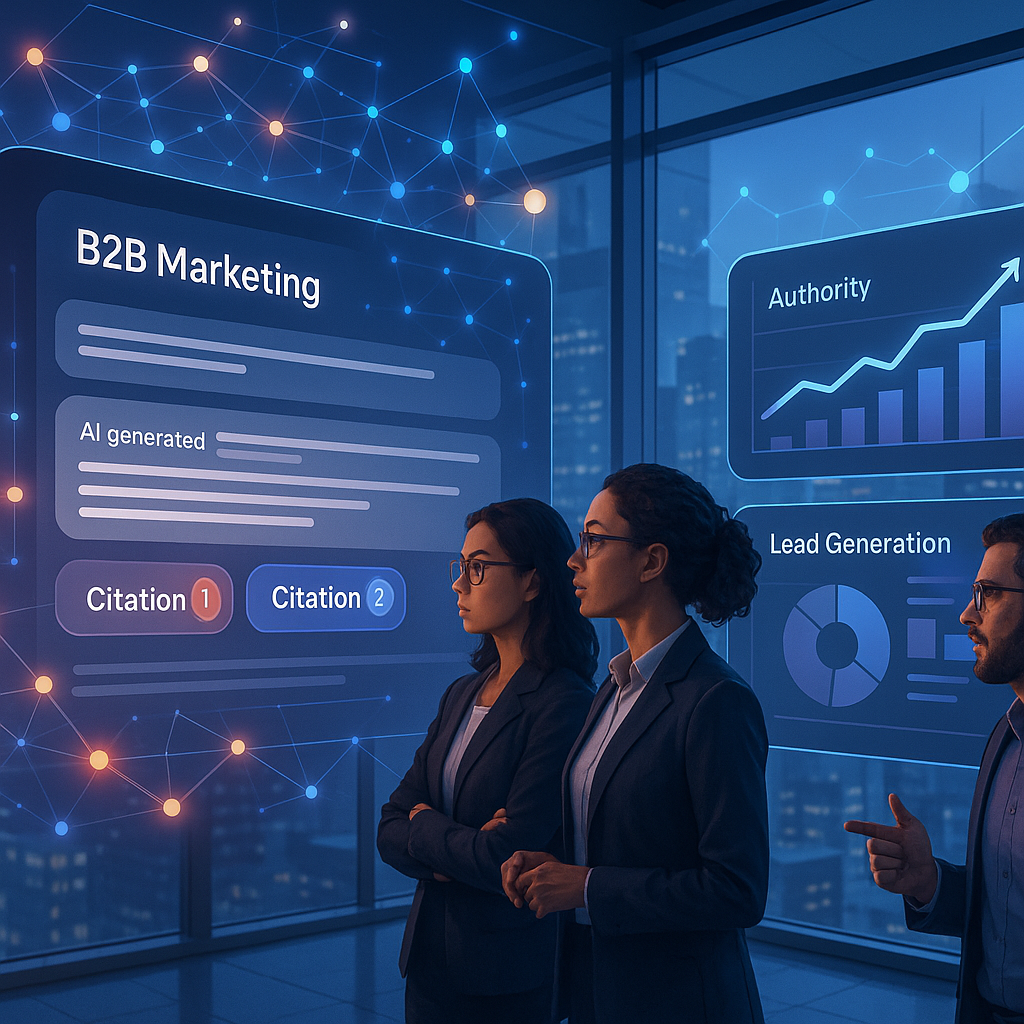
B2B lead generation is changing fast. Not gradually. Not politely. It’s shifting like sand under your feet.
One day, ranking on Google and running a few LinkedIn ads felt like enough. The next? Buyers are asking AI tools for vendor recommendations before they ever land on a website. They’re reading AI-generated summaries. They’re trusting cited sources surfaced inside platforms like ChatGPT.
That changes the game.
If a brand isn’t showing up inside AI-driven search citations, it’s invisible to an entire layer of modern decision-makers. And for companies serious about scaling B2B lead gen, that’s not a small problem.
It’s existential.
Why ChatGPT Search Citations Matter for B2B Lead Generation
Here’s the hot take: traditional SEO alone isn’t enough anymore.
AI search tools don’t just rank pages. They synthesize information. They pull from authoritative domains. They cite sources they deem trustworthy. And those citations influence perception before a buyer ever clicks.
Think of it like this - if classic SEO is fighting for shelf space in a store, AI citations are like getting recommended by the store clerk directly. Which one carries more weight?
Exactly.
The Shift in Buyer Behavior
B2B buyers are overloaded. They don’t want to sift through 10 blog posts and 4 gated PDFs. They want answers. Clear. Fast. Reliable.
So they ask AI platforms:
- “Who are the best B2B SaaS lead generation agencies?”
- “What tools help scale outbound prospecting?”
- “Which companies specialize in AI-driven sales funnels?”
If a company isn’t cited in those responses, it doesn’t exist in that moment of intent.
And in B2B, moments of intent are everything.
What Scaling B2B Lead Gen Really Means
Scaling isn’t just increasing ad spend. It’s not blasting more cold emails. It’s not hiring five SDRs and hoping for the best.
Real scaling means:
- Building predictable inbound pipelines
- Positioning as a category authority
- Appearing where buyers are actively researching
- Reducing customer acquisition cost over time
AI search citations sit at the intersection of all four.
Because when an AI engine references a company repeatedly, it reinforces authority. Authority builds trust. Trust shortens sales cycles.
And shorter cycles? That’s scale.
How ChatGPT Citations Influence Authority
Authority in digital marketing used to mean backlinks. Domain rating. Media mentions.
Now? It also means being part of the AI knowledge layer.
When ChatGPT or similar systems cite a company, several things happen:
- The brand gains perceived expertise
- Buyers associate it with solution credibility
- Sales conversations start warmer
- Referral traffic increases organically
It’s like being quoted in a respected industry magazine - except the magazine is an algorithm used by millions.
That’s leverage.
The Strategic Framework for AI-Driven B2B Lead Generation
Scaling B2B lead gen with ChatGPT search citations isn’t luck. It’s architecture.
Here’s what smart companies focus on.
1. Structured, Authoritative Content
AI models favor clarity. Structured insights. Data-backed claims. Pages that answer questions cleanly.
That means:
- Publishing in-depth guides
- Answering high-intent industry queries
- Using clear subheadings and logical formatting
- Avoiding fluff-heavy content
Thin content doesn’t get cited. Comprehensive resources do.
2. Digital PR and Third-Party Mentions
AI tools pull from across the web. They look at consensus signals.
If a brand appears consistently in:
- Industry roundups
- Expert interviews
- Comparison articles
- Thought leadership pieces
It strengthens citation probability.
It’s a web of validation. Each mention reinforces the next.
3. Topical Authority Clusters
Random blog posts won’t cut it.
Companies scaling effectively build content ecosystems around core B2B lead generation themes:
- AI prospecting strategies
- Outbound automation systems
- Sales funnel optimization
- Conversion rate refinement
Over time, that consistency signals expertise to both search engines and AI systems.
And expertise gets cited.
Where Most Companies Get It Wrong
Here’s what often happens.
A marketing team hears about AI search. They publish one article optimized for “ChatGPT SEO.” They wait.
Nothing changes.
Why?
Because AI visibility isn’t a hack. It’s a reputation outcome.
Authority compounds. It doesn’t spike overnight.
Another common mistake? Over-optimizing for keywords instead of clarity. AI models prioritize usefulness. If content reads like it was written for bots, ironically, it loses human and machine trust.
Sounds simple, right? Yet it’s ignored constantly.
Integrating AI Citations into a Full-Funnel Strategy
AI visibility alone won’t close deals. It fuels the top and middle of the funnel.
The smartest B2B teams integrate it like this:
Awareness Stage
- Educational long-form content
- Industry research summaries
- Problem-solution breakdowns
Consideration Stage
- Detailed comparison guides
- Case study highlights
- Framework-based resources
Decision Stage
- Clear service positioning
- Transparent process explanations
- Strong proof points
When AI systems cite a company during early research, prospects often return directly later. Branded searches increase. Sales calls start with familiarity instead of skepticism.
That’s compounding trust.
The Role of Specialized Partners
Building AI citation authority takes technical SEO, digital PR, structured content planning, and analytics alignment. It’s layered.
This is where specialized services enter the picture.
Platforms like rapidwombat.com focus specifically on positioning brands for AI-driven search visibility. Instead of chasing outdated tactics, they architect digital authority with AI ecosystems in mind.
That distinction matters.
Because scaling B2B lead generation today isn’t about doing more. It’s about doing the right things in the right channels.
Measuring Success in AI-Enhanced Lead Gen
What should companies track?
Vanity metrics won’t help.
Instead, focus on:
- Branded search growth
- Referral traffic from authoritative domains
- Inbound demo requests
- Shortened sales cycle duration
- Higher close rates on organic leads
If AI citations are working, inbound quality improves. Conversations become sharper. Prospects reference content unprompted.
That’s when marketing shifts from chasing leads to filtering them.
The Competitive Advantage Window
Here’s something many overlook.
AI search optimization is still early. Many competitors haven’t adapted. They’re focused on old-school ranking metrics.
That creates a window.
Companies that invest now build digital authority layers that are difficult to displace later. Once AI systems associate a brand with specific expertise, it becomes part of the knowledge fabric.
And dislodging established authority? That’s like trying to replace a trusted industry veteran overnight. It rarely happens.
Is This the Future of B2B Lead Generation?
It’s already happening.
Buyers are consulting AI before contacting vendors. Procurement teams summarize research using AI tools. Executives validate vendor credibility through aggregated responses.
The brands cited consistently gain invisible endorsement.
Others fade into background noise.
So the better question isn’t whether AI citations matter.
It’s whether a company can afford to ignore them.
Final Thoughts on Scaling with ChatGPT Search Citations
Scaling B2B lead generation today requires adapting to how decisions are made. AI-driven search citations are becoming part of that decision infrastructure.
Authority now lives in algorithms as much as it lives in boardrooms.
The companies that understand this shift - and act on it - build durable pipelines. Not spikes. Not gimmicks. Sustainable momentum.
And in B2B growth, momentum is everything.
Miss the shift, and scaling feels like pushing a boulder uphill.
Embrace it, and suddenly the hill starts working in your favor.