Replacing Your Marketing Department with AI Growth Engines
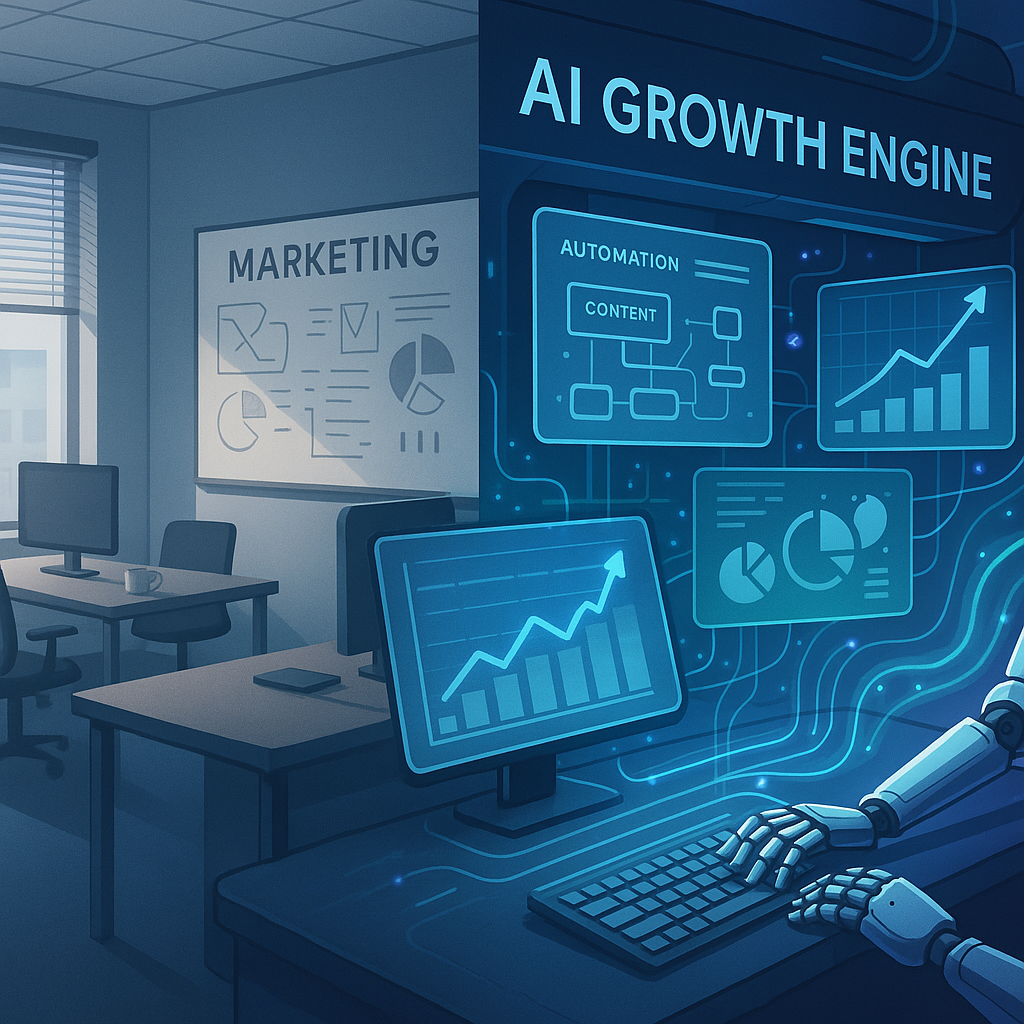
There was a time when building a serious company meant building a serious marketing department. A row of desks. Slack channels buzzing. Weekly stand-ups that somehow lasted an hour. Campaign calendars stretching across whiteboards like battle plans.
Now? Things look different.
Startups are quietly swapping entire teams for something leaner, faster, and frankly less emotional - AI growth engines. It sounds dramatic. Maybe even reckless. But for many founders, it feels less like a gamble and more like the natural next step.
The real question isn’t whether artificial intelligence can support marketing. It’s whether it can replace most of it.
Let’s unpack that.
What Is an AI Growth Engine, Really?
Strip away the buzzwords and hype, and an AI growth engine is a system. Not a single tool. Not a chatbot slapped onto a website. A system.
It combines:
- Content generation powered by language models
- Automated email sequences triggered by behavior
- Predictive analytics for campaign optimization
- Ad creation and testing without human micromanagement
- SEO research and publishing workflows on autopilot
- Lead scoring and CRM updates in real time
Imagine a marketing team that never sleeps, never calls in sick, never debates font sizes for 45 minutes. That’s the promise.
And for companies that value speed over ceremony, that promise is hard to ignore.
Why Companies Are Replacing Traditional Marketing Departments
Here’s a hot take - most marketing departments aren’t slow because people are lazy. They’re slow because coordination is messy.
Meetings. Approvals. Revisions. Budget discussions. More revisions.
An AI growth engine collapses that entire chain into something closer to a control panel. Adjust inputs. Measure outputs. Iterate. Done.
1. Cost Efficiency That’s Hard to Argue With
A full in-house team can easily cost six figures per year - and that’s before ad spend. Writers, designers, strategists, managers. The overhead stacks up fast.
AI tools, by comparison, operate on subscription pricing. Predictable. Scalable. No health insurance paperwork required.
For early-stage companies, this isn’t just appealing. It’s survival.
2. Speed as a Competitive Weapon
Markets move quickly. Trends appear and vanish in weeks. An AI-driven system can:
- Generate blog posts in minutes
- Spin up ad variations instantly
- Analyze performance data continuously
- Adjust targeting automatically
Traditional teams often need days - sometimes weeks - to pivot. In a digital landscape, that delay can feel like trying to race a sports car on a bicycle.
3. Data Without the Guesswork
Human marketers rely on experience and instinct. Those matter. But machines digest massive datasets without bias or fatigue.
An AI growth engine can detect patterns in click-through rates, engagement metrics, and purchase behavior faster than any analyst juggling spreadsheets.
It doesn’t replace insight. It amplifies it.
What an AI-First Marketing Stack Looks Like
Replacing a department doesn’t mean chaos. It means architecture.
A typical AI-driven growth stack might include:
- AI Content System - Blog posts, landing pages, ad copy, email campaigns generated and optimized for SEO.
- Automated Funnel Builder - Smart sequences that adapt to user behavior.
- Performance Analytics Engine - Real-time dashboards highlighting what’s working.
- Conversion Optimization Layer - Continuous A/B testing managed algorithmically.
- CRM Automation - Lead segmentation and nurturing without manual tagging.
When integrated correctly, these pieces act like a self-correcting ecosystem. Traffic comes in. Data flows through. Adjustments happen automatically.
It’s less like managing people and more like tuning a machine.
The Human Question - Are People Still Needed?
Let’s address the elephant in the room.
Does replacing a marketing department mean eliminating humans entirely?
Not exactly.
The shift is less about removal and more about repositioning. Instead of five generalists executing tasks, a company might have one strategist overseeing systems. Instead of brainstorming headline ideas for hours, leadership evaluates high-performing variations generated in seconds.
Humans move up the ladder - closer to direction and creative judgment. Machines handle repetition and analysis.
It’s the difference between rowing the boat and steering it.
SEO and AI - A Natural Partnership
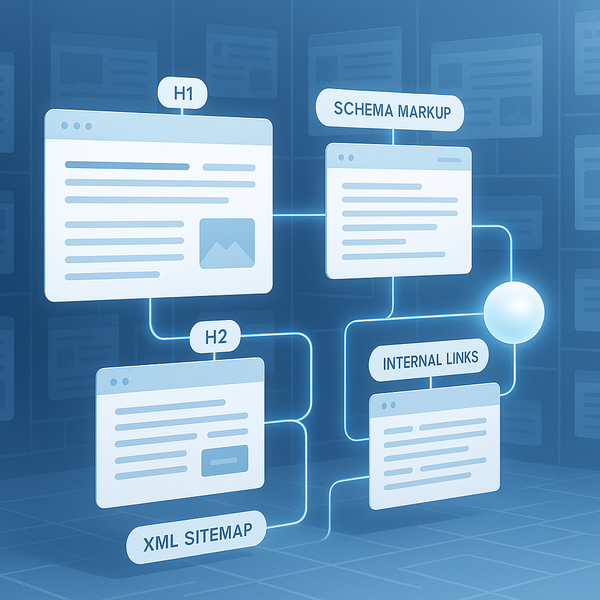
Search engine optimization thrives on consistency. Regular publishing. Keyword targeting. Structured formatting. Internal linking.
AI excels at consistency.
With the right setup, companies can produce optimized content at scale without sacrificing readability. Structured headers. Natural keyword placement. Clean formatting. All handled systematically.
For businesses aiming to dominate organic traffic, AI-driven SEO isn’t optional anymore. It’s becoming standard practice.
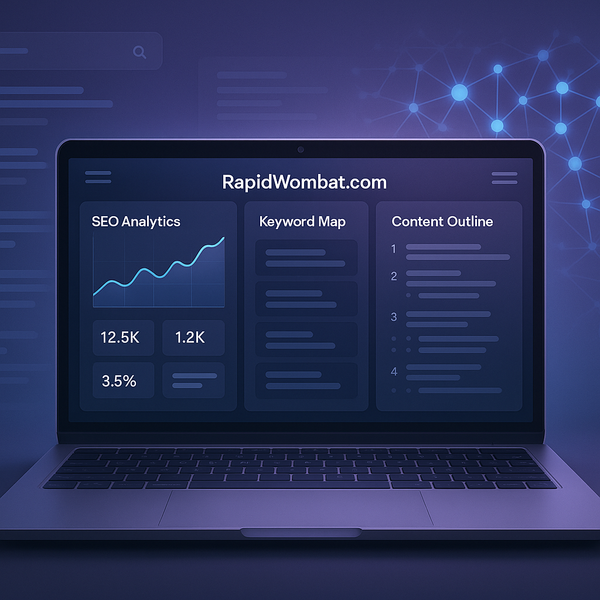
Platforms like rapidwombat.com are building entire growth infrastructures around this concept - blending automation with strategic oversight to help brands scale visibility without bloated teams.
Potential Pitfalls - Because It’s Not Magic
It would be naïve to pretend this transformation is flawless.
Common challenges include:
- Poor tool integration leading to fragmented workflows
- Over-automation that sacrifices brand voice
- Data misinterpretation without strategic review
- Ethical concerns around content authenticity
An AI growth engine requires calibration. Clear goals. Defined metrics. Guardrails.
Left unchecked, automation can feel robotic. Guided properly, it feels seamless.
Who Should Consider Replacing Their Marketing Department?
Not every organization needs to overhaul its structure tomorrow.
But certain profiles benefit enormously:
Startups With Limited Runway
Cash matters. Speed matters more. Lean automation allows founders to test ideas quickly without burning capital on large payroll commitments.
Digital-First Brands
E-commerce stores, SaaS companies, online education platforms - these businesses operate in measurable environments. Data-driven systems thrive there.
Agencies Seeking Scale
Agencies adopting AI internally can serve more clients without proportionally increasing headcount. That’s leverage.
The Strategic Shift - From Department to Engine
This isn’t just a tooling upgrade. It’s a mindset shift.
Traditional marketing departments function like committees. AI growth engines function like laboratories. Test. Measure. Refine. Repeat.
The feedback loop tightens dramatically. Campaign insights that once took a quarter to surface now appear in days. Sometimes hours.
And when iteration speeds up, growth often follows.
Is This the Future of Marketing?
Look at the broader pattern.
Accounting embraced automation. Manufacturing did it decades ago. Customer support increasingly relies on intelligent systems.
Marketing was always going to evolve.
The companies resisting change may cling to tradition for comfort. The ones experimenting with AI growth engines? They’re chasing efficiency, adaptability, and scale.
Replacing a marketing department with an AI-driven system isn’t about eliminating creativity. It’s about removing friction. About shifting energy from repetitive execution to strategic direction.
For many businesses, the question is no longer “Should this happen?”
It’s “How fast can we implement it without falling behind?”
The era of the AI growth engine has arrived. The only debate left is who builds theirs first.