How to Train RapidWombat on Your Brand’s Unique Voice
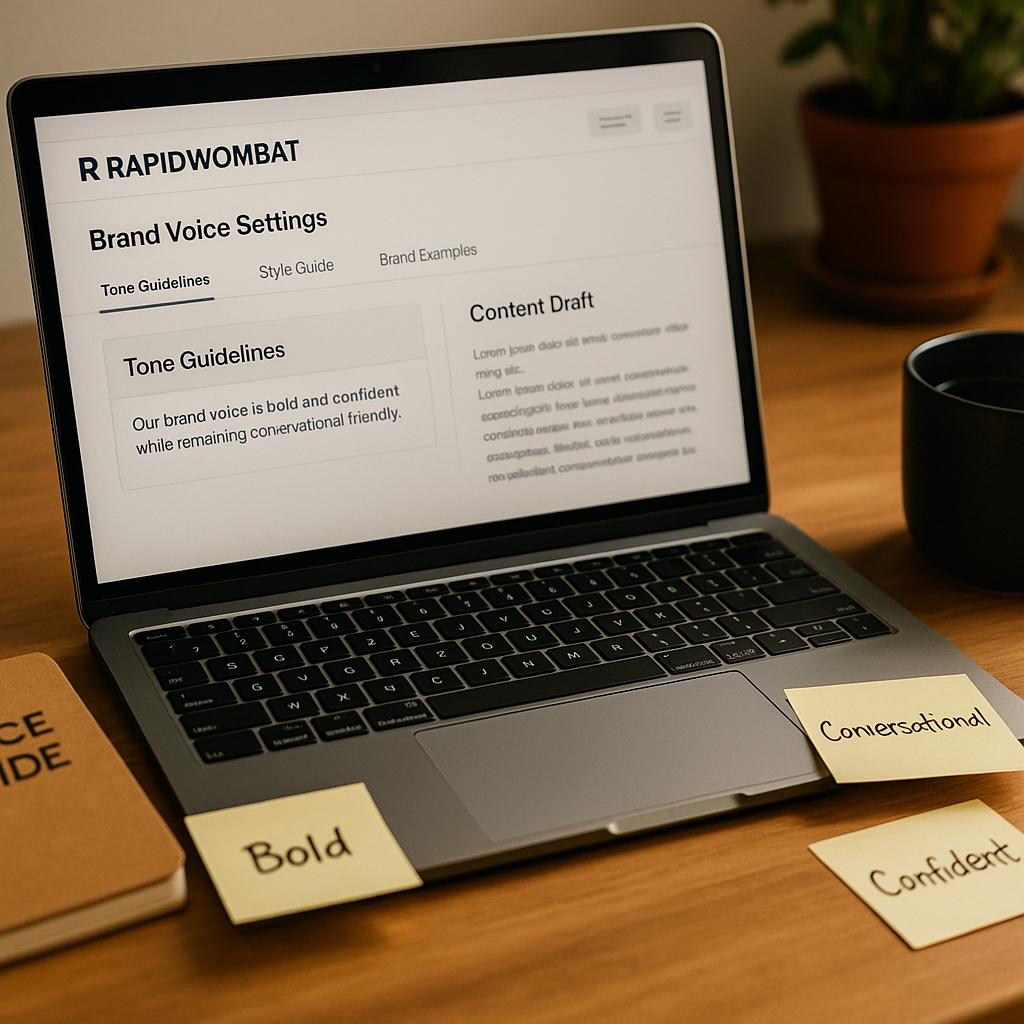
Brands don’t just speak. They hum. They whisper. They crack jokes at the right moment and stay serious when it matters. Voice is personality in written form - and if it’s off by even a hair, customers feel it. That’s where training matters. When companies use rapidwombat.com to create content, the real magic doesn’t come from simply turning it on. It happens when the system learns how the brand thinks, jokes, persuades, and even pauses. Done right, the output feels less like software and more like a seasoned team member. So how do you train RapidWombat on your brand’s unique voice without turning the process into a never-ending documentation project? Let’s break it down.
Why Brand Voice Training Actually Matters
Here’s a hot take - most companies think they have a clear voice. They don’t. They have adjectives. "Professional." "Friendly." "Innovative." But those are vibes, not instructions. Voice is more like a fingerprint. It shows up in:
- Sentence length and rhythm
- Word choice - simple or technical?
- Humor - dry, playful, none at all?
- Confidence level - bold claims or cautious phrasing?
- Emotional tone - calm, urgent, inspiring?
Training RapidWombat without defining these elements is like asking a musician to "play something cool." You might get lucky. But consistency? Not likely. And consistency is everything in brand marketing.
Step 1 - Audit What Already Exists
Before feeding anything into the platform, smart teams start with an audit. They gather:
- Top-performing blog posts
- Email campaigns with strong open rates
- Landing pages that convert
- Social captions with high engagement
- Internal brand guidelines, if they exist
Patterns begin to appear. Maybe sentences are short and punchy. Maybe the company leans into storytelling. Maybe it avoids jargon completely. Or maybe it thrives on insider language that makes customers feel part of a club. This isn’t busywork. It’s voice mapping. Without this step, training becomes guesswork.
Step 2 - Translate "Vibes" Into Rules
Saying a brand is "bold" doesn’t help much. Saying it "uses strong verbs, avoids hedging words, and speaks directly to the reader"? That’s actionable. When preparing to train RapidWombat, teams should convert abstract traits into practical guidelines.
Example: Turning Traits Into Instructions
Instead of writing: "We are conversational and energetic." Write:
- Use contractions consistently.
- Address the reader as "you."
- Keep sentences under 20 words unless emphasis requires longer flow.
- Use rhetorical questions occasionally.
- Avoid corporate buzzwords.
See the difference? One describes personality. The other builds it. RapidWombat performs best when fed clear patterns. The more specific the training inputs, the more accurate the outputs.
Step 3 - Provide High-Quality Writing Samples
If brand voice were a recipe, writing samples would be the ingredients. Strong samples should be:
- Recent
- Aligned with current positioning
- Edited and approved
- Representative of the tone you want more of
Garbage in, garbage out. It’s blunt, but true. Feeding outdated messaging into RapidWombat trains it on yesterday’s identity. That’s like teaching someone to introduce your company with last year’s slogan. Instead, curate intentionally. Fewer high-quality examples beat a mountain of mixed signals.
Step 4 - Define What the Brand Is Not
This part gets overlooked constantly. Voice clarity doesn’t just come from saying what you are. It sharpens when you declare what you’re not. For example:
- Not sarcastic
- Not overly casual
- Not academic
- Not salesy
- Not preachy
Why does this matter? Because AI tools, including RapidWombat, operate within ranges. If boundaries aren’t set, tone can drift. A slightly playful piece turns flippant. A confident article becomes aggressive. Clear guardrails prevent that drift.
Step 5 - Train With Structured Prompts
Training isn’t just uploading documents. It’s interaction. Smart teams create structured prompts that reinforce voice expectations repeatedly. Here’s a simple framework:
- State the audience.
- Clarify the goal.
- Describe tone rules.
- Include formatting preferences.
- Reference sample style patterns.
For example: "Write a 1,200-word blog post for startup founders. Use short, punchy sentences mixed with longer explanations. Avoid buzzwords. Be confident but not arrogant. Include rhetorical questions and practical steps." The more consistent the instructions, the more predictable the results. It’s training through repetition. Just like onboarding a new hire.
Step 6 - Refine Through Feedback Loops
No system nails voice perfectly on the first attempt. Expect iteration. The best workflow looks like this:
- Generate draft
- Edit lightly for tone alignment
- Note corrections clearly
- Adjust prompts or guidelines
- Regenerate with refinements
Over time, the gap shrinks. Honestly, this stage separates casual users from brands that truly integrate AI into their content strategy. Feedback is fuel. Without it, performance plateaus.
Common Mistakes When Training RapidWombat
Some patterns show up again and again.
1. Overloading With Conflicting Samples
If half the material sounds formal and the other half reads like social media slang, confusion is inevitable. Pick a direction.
2. Ignoring Formatting Style
Voice isn’t just tone. It’s structure. Does the brand use:
- Short paragraphs?
- Frequent subheadings?
- Bullet lists?
- Data-driven sections?
Formatting shapes perception. A wall of text feels serious. Broken sections feel accessible. Train accordingly.
3. Forgetting Audience Nuance
A B2B SaaS company speaking to CTOs will sound different from an ecommerce brand targeting first-time buyers. RapidWombat can adjust tone by audience - but only if told to. Sounds obvious, right? Yet many teams skip this detail.
How to Measure Voice Alignment
Training without measurement is like steering a car with no dashboard. Instead of guessing, define indicators:
- Reduced editing time per draft
- Consistent tone across channels
- Improved engagement metrics
- Internal approval speed
If editors spend less time rewriting introductions or softening claims, that’s progress. If readers stay longer on the page, even better. Voice consistency builds trust. Trust builds conversions. The connection isn’t abstract - it’s measurable.
Advanced Tips for Long-Term Brand Consistency
Once the basics are dialed in, refinement becomes strategic.
Create a Living Voice Document
Not a static PDF buried in a drive. A dynamic, updated guide that evolves as messaging shifts.
Segment Voice by Content Type
Your homepage might sound bold and declarative. Educational blog posts may lean explanatory and calm. Email campaigns might feel intimate. Training RapidWombat with contextual voice variations keeps everything cohesive without sounding repetitive.
Revisit Training Quarterly
Brands grow. Markets change. Messaging matures. Quarterly reviews ensure the system reflects current positioning rather than an outdated snapshot. Think of it like tuning an instrument. Slight adjustments keep everything sharp.
The Bigger Picture
At its core, training RapidWombat on your brand’s unique voice isn’t technical. It’s intentional. It forces clarity. It demands decisions about personality, confidence, and communication style. And once those decisions are made, the platform becomes an amplifier. Used casually, it produces content. Used strategically, it produces alignment. If you ask most marketing leaders what they want, they’ll say consistency, efficiency, and scale. Training bridges all three. It turns a powerful tool into a voice extension of the company itself. And that’s the real goal. Not just faster writing. Stronger identity. Clearer messaging. Content that sounds unmistakably like you - every single time.