How to Automate Your 2026 Marketing Roadmap
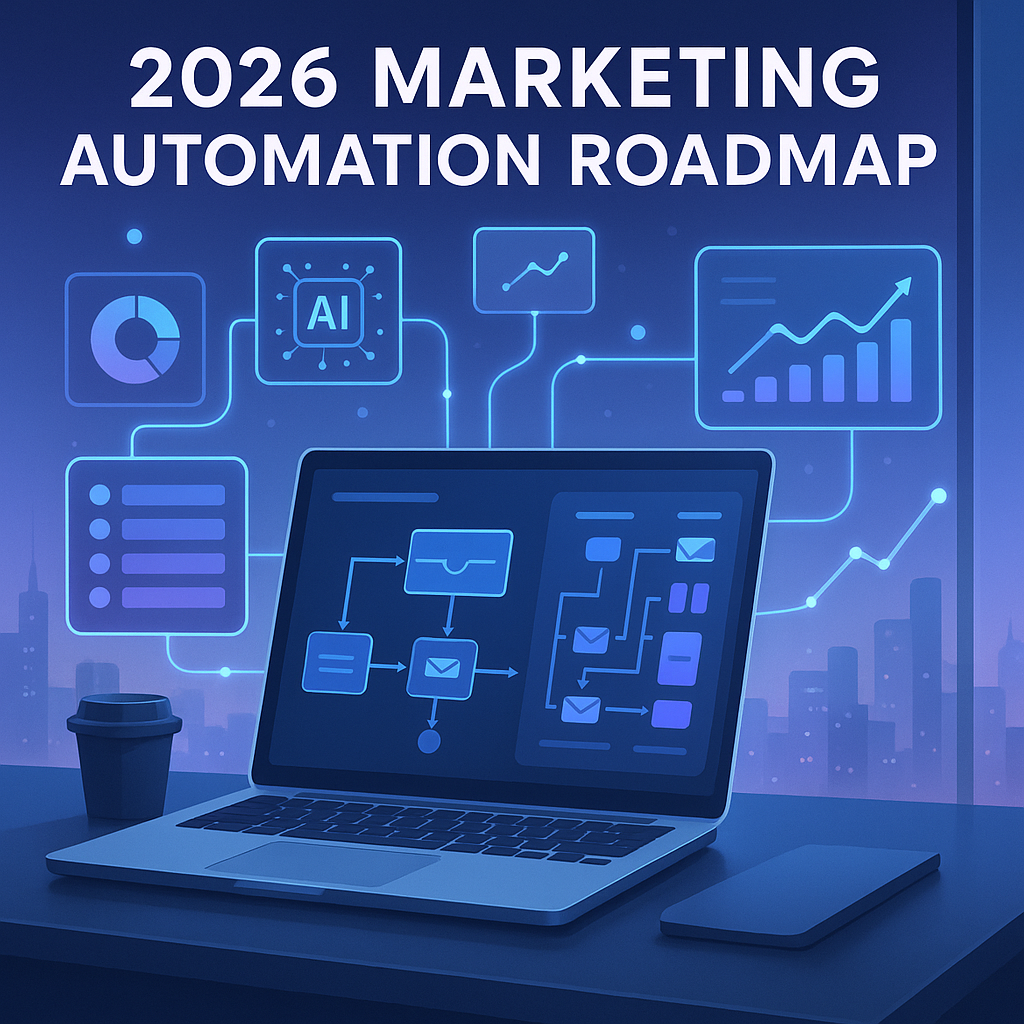
Marketing in 2026 won’t reward the busiest team. It will reward the smartest one.
There’s a difference.
Plenty of brands still treat their roadmap like a to-do list that never ends - post this, send that, launch something, scramble, repeat. It feels productive. It looks productive. But it’s exhausting. And honestly? It’s outdated.
Automation isn’t some futuristic buzzword anymore. It’s the operating system behind modern growth. If a business wants predictable results next year, it needs a structured, automated marketing roadmap that runs smoothly - even when the team is offline.
So how does a company build one without turning its strategy into a cold, robotic machine?
Let’s break it down.
Why 2026 Demands Marketing Automation
Attention spans are shrinking. Channels are multiplying. Data is exploding.
Trying to manually manage campaigns across email, search, social platforms, SMS, paid ads, and content hubs is like trying to conduct an orchestra while playing every instrument at once. Technically possible. Realistically chaotic.
Automation changes the game by:
- Reducing repetitive manual work
- Improving personalization at scale
- Ensuring consistent lead nurturing
- Aligning sales and marketing workflows
- Delivering measurable performance insights in real time
Sounds simple, right?
It can be - if approached correctly.
Step 1: Start With Outcomes - Not Tools
Most teams make the same mistake. They shop for platforms first.
New dashboard. Fancy integrations. AI-driven analytics.
Impressive, sure. But without a defined roadmap, even the best software becomes expensive clutter.
Define Clear 2026 Objectives
A strong automated marketing roadmap begins with clarity:
- Revenue targets
- Lead generation goals
- Customer acquisition cost benchmarks
- Retention and loyalty metrics
- Brand positioning milestones
When objectives are measurable, automation has direction. Without them, it’s just noise on autopilot.
Step 2: Map the Full Customer Journey
Automation works best when it mirrors human behavior.
Think of the customer journey as a path through a forest. Some people wander. Some sprint. Others hesitate at every turn. A smart roadmap anticipates each movement and places helpful signposts along the way.
Key Stages to Automate
- Awareness: Automated social scheduling, SEO-driven content publishing, paid ad optimization
- Consideration: Lead magnets, email sequences, retargeting campaigns
- Conversion: Behavior-triggered offers, abandoned cart flows, sales notifications
- Retention: Onboarding sequences, loyalty rewards, re-engagement campaigns
- Advocacy: Referral automation, review requests, community invites
When these stages connect seamlessly, the roadmap feels intentional - not reactive.
Step 3: Centralize Data Before Scaling Automation
Here’s a hot take: automation without clean data is dangerous.
It’s like building a house on sand. Everything looks fine until the cracks appear.
Before layering complex workflows, businesses should:
- Integrate CRM and email platforms
- Unify ad performance data
- Standardize naming conventions
- Remove duplicate contacts
- Define tracking events clearly
Once systems speak the same language, automation becomes powerful instead of messy.
Step 4: Build Automated Campaign Frameworks
This is where things get exciting.
An automated marketing roadmap isn’t a single workflow. It’s a structured ecosystem.
Core Automations Every 2026 Roadmap Needs
- Lead Capture and Segmentation
Automatically categorize new contacts based on behavior, interests, or source channel. - Welcome Sequences
Introduce brand value immediately. No delays. No manual follow-ups. - Behavior-Triggered Emails
Send tailored messages when users click, browse, or download specific assets. - Content Distribution Workflows
Schedule blog posts, newsletters, and social promotions in coordinated waves. - Sales Alerts
Notify representatives when leads hit scoring thresholds. - Re-Engagement Campaigns
Automatically reconnect with inactive contacts.
Each piece supports the others. Together, they form a marketing engine that runs continuously.
Step 5: Use AI - But Keep the Human Voice
Artificial intelligence will dominate 2026 strategy discussions. Predictive analytics. Automated content suggestions. Smart bidding systems.
All useful.
But here’s the truth: audiences still crave authenticity.
Automation should enhance creativity, not replace it. Think of AI as a co-pilot - not the pilot. It processes data at lightning speed, but brand personality must remain distinctly human.
That means reviewing automated copy, refining tone, and ensuring messaging aligns with real customer pain points.
Efficiency without empathy falls flat.
Step 6: Plan Quarterly Optimization Cycles
An automated roadmap is not "set it and forget it."
Markets shift. Algorithms change. Customer expectations evolve.
Smart teams build quarterly review checkpoints into their 2026 plan:
- Analyze funnel conversion rates
- Evaluate campaign ROI
- Refine segmentation logic
- Adjust lead scoring thresholds
- Test new messaging angles
Small refinements compound over time. Like adjusting the steering wheel slightly during a long road trip - tiny corrections prevent massive detours.
Step 7: Outsource Strategically When Needed
Not every business has the bandwidth to design complex automation internally.
And that’s fine.
Sometimes the smartest move is partnering with specialists who understand systems, integrations, analytics, and campaign structure at a deep level.
For brands seeking expert-level execution without building an in-house department from scratch, platforms like rapidwombat.com provide structured support in building scalable digital growth systems.
The goal isn’t to outsource responsibility. It’s to accelerate results while maintaining strategic oversight.
Common Mistakes to Avoid in 2026 Marketing Automation
Even well-intentioned roadmaps can derail. Watch for these pitfalls:
- Over-automation: Bombarding audiences with constant triggered messages
- Poor segmentation: Treating all leads the same
- Ignoring analytics: Failing to measure performance accurately
- Complicated workflows: Building systems no one understands
- No documentation: Leaving future team members guessing
Automation should simplify operations - not create digital spaghetti.
What a Fully Automated 2026 Roadmap Looks Like
Imagine this scenario.
A prospect downloads a guide. Instantly, segmentation tags activate. A personalized email sequence begins. Engagement triggers adjust messaging tone. Sales receives notification when intent signals spike. Retargeting ads reinforce value. Onboarding content launches automatically after purchase. Months later, loyalty incentives appear right on schedule.
No scrambling. No forgotten follow-ups. No awkward gaps.
Just a seamless experience that feels intentional from start to finish.
That’s the difference between random campaigns and a strategic automated marketing roadmap.
Final Thoughts on Automating Your 2026 Marketing Roadmap
Automation isn’t about removing effort. It’s about redirecting it.
When repetitive tasks disappear, creative strategy expands. When systems handle timing and triggers, teams focus on storytelling, positioning, and innovation.
Have you ever noticed how the most successful brands feel consistent? That consistency rarely happens by accident. It’s designed. Structured. Automated.
2026 will reward businesses that think long term, invest in integrated systems, and treat automation as infrastructure - not decoration.
The roadmap starts with clarity. Then alignment. Then execution.
Build it carefully. Optimize it regularly. Let it run intelligently.
And watch what happens.