How RapidWombat Predicts Gemini’s Ranking Factors

Search is shifting. Again.
First it was keywords. Then backlinks. Then intent. Now? AI-driven engines like Gemini are rewriting the rulebook in real time. And while most marketers are still squinting at the smoke, trying to figure out where the fire is, some platforms are already mapping the heat signatures.
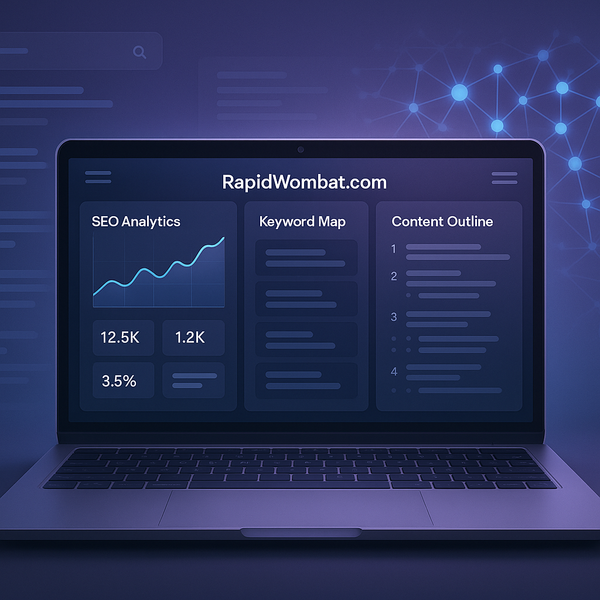
rapidwombat.com is one of them.
This isn’t guesswork dressed up as analytics. It’s a system built to predict Gemini’s ranking factors before they become obvious to everyone else. Sounds bold? It is. But there’s logic behind it.
Why Gemini Ranking Factors Are Different
Gemini doesn’t behave like traditional search algorithms. It doesn’t simply rank pages - it interprets them. Context matters more. Language depth matters more. User interaction signals? Hugely important.
Here’s the shift in plain English:
- Google once matched keywords.
- Then it matched intent.
- Now Gemini evaluates meaning, structure, and usefulness at a far deeper level.
Think of old-school SEO like organizing a filing cabinet. Neat labels, consistent categories, tidy folders. Gemini, on the other hand, is more like a librarian who reads the book before shelving it.
Subtle difference. Massive impact.
The Core Idea Behind RapidWombat’s Prediction Model
RapidWombat approaches Gemini’s ranking system like a behavioral scientist studying patterns. Instead of reacting to updates, it analyzes signals continuously and builds predictive models around emerging trends.
Here’s how that philosophy breaks down:
1. Pattern Recognition at Scale
Gemini updates constantly. Micro-adjustments happen daily. Most tools wait for confirmed changes. RapidWombat tracks fluctuations across industries and identifies correlations before they’re officially acknowledged.
When specific content structures begin outperforming others, the system flags it.
When engagement metrics shift in weight, it notices.
When semantic density increases in top-ranking content - it adapts.
2. Semantic Depth Analysis
Surface-level optimization doesn’t cut it anymore. Gemini evaluates:
- Concept completeness
- Context relevance
- Entity relationships
- Conversational clarity
RapidWombat analyzes these elements using layered semantic mapping. It doesn’t just ask, “Is this keyword present?” It asks, “Is this topic fully understood?”
That’s a big distinction.
3. Behavioral Feedback Loops
Here’s something many overlook - Gemini learns from user interaction patterns. Dwell time. Scroll depth. Refinement searches. Even hesitation signals.
RapidWombat incorporates behavioral modeling into its predictions. If users consistently refine queries after visiting certain content types, that pattern becomes a ranking indicator.
Search engines are becoming more human. So optimization must follow.
Signals RapidWombat Believes Gemini Prioritizes
While no platform outside Google can claim perfect certainty, RapidWombat’s predictive data points toward several dominant ranking factors.
Content Structure Fluidity
Rigid formatting feels robotic. Gemini appears to reward content that flows naturally while still maintaining logical organization.
Balanced hierarchy matters:
- Clear H2 and H3 usage
- Concise paragraphs
- Intent-driven formatting
- Strategic use of lists
Structure should guide - not constrain.
Topical Authority Clusters
Single articles don’t dominate anymore. Ecosystems do.
RapidWombat predicts Gemini values interconnected content clusters that demonstrate layered expertise. Instead of isolated blog posts, websites need topic networks that reinforce one another.
Picture a spider web. One strand alone breaks easily. Interconnected strands? Stronger. Resilient.
Entity-Based Optimization
Keywords are fragments. Entities are concepts.
Gemini likely interprets content through entity relationships - people, brands, technologies, themes. RapidWombat tracks entity saturation and contextual accuracy to align with this model.
It’s not about repeating phrases. It’s about reinforcing meaning.
Authenticity Signals
AI-generated content saturation is rising fast. Gemini seems to detect over-processed writing patterns.
RapidWombat’s analysis suggests that natural variation in tone, sentence rhythm, and phrasing correlates with stronger rankings.
Perfect symmetry? Suspicious.
Controlled imperfection? Human.
How RapidWombat Stays Ahead of Algorithm Updates
Most SEO tools operate reactively. An update hits. Rankings shift. Data is reviewed. Recommendations change.
RapidWombat flips that timeline.
Continuous Data Sampling
Instead of periodic audits, it monitors ranking volatility across thousands of tracked terms. When clusters of fluctuations appear, predictive alerts trigger scenario modeling.
Competitive Landscape Modeling
The platform studies:
- Emerging competitors gaining sudden traction
- Content patterns among newly ranking domains
- Formatting changes within top 10 results
- Engagement shifts tied to structural edits
Patterns emerge before public confirmation. That’s the edge.
Machine Learning Refinement
Prediction models adjust continuously. When hypotheses prove accurate, they gain weighting. When they miss, they recalibrate.
It’s less like a static tool and more like a learning organism.
Practical Implications for SEO Professionals
So what does all this mean for content creators and digital marketers?
Three things stand out.
1. Depth Beats Density
Stuffing terms no longer moves the needle. Comprehensive exploration does. RapidWombat’s predictions align with long-form, well-layered resources outperforming thin pages.
2. UX Is SEO
If users hesitate, bounce, or refine queries, rankings adjust accordingly. That means page speed, readability, layout clarity, and logical sequencing are part of optimization strategy.
Design and content are no longer separate conversations.
3. Authority Requires Consistency
Publishing randomly across disconnected topics dilutes topical signals. RapidWombat’s modeling reinforces niche concentration and structured expansion.
Focused expertise compounds. Scattered effort fades.
Why Prediction Matters More Than Reaction
Here’s a blunt truth - by the time most marketers notice a ranking drop, competitors have already adjusted.
Prediction changes positioning. It allows teams to:
- Adjust content frameworks early
- Build clusters before demand spikes
- Strengthen semantic signals proactively
- Reduce volatility risk
Waiting is comfortable. Leading is profitable.
The Bigger Picture: AI Search Is Accelerating
Gemini is not a temporary shift. It represents a structural evolution in how information is ranked and delivered.
Search engines are moving toward:
- Conversational interpretation
- Context layering
- Intent refinement
- Behavioral learning
RapidWombat’s predictive framework acknowledges this trajectory instead of resisting it.
Optimization is no longer about pleasing a crawler. It’s about aligning with a learning system.
And learning systems reward clarity, depth, coherence, and authentic structure.
Final Thoughts on RapidWombat and Gemini Ranking Factors
Predicting Gemini’s ranking factors requires more than tracking keywords or backlinks. It demands pattern analysis, semantic modeling, behavioral interpretation, and constant recalibration.
RapidWombat positions itself at that intersection - where data science meets search psychology.
Will prediction ever be perfect? Of course not.
But in an environment where algorithms evolve daily, directional accuracy beats delayed certainty every time.
Search is becoming more intuitive. More contextual. More human.
Tools must evolve the same way.
And if the early signals hold true, predictive SEO platforms like RapidWombat won’t just respond to Gemini’s ranking factors - they’ll anticipate them.