Gemini Content Clusters: The 2026 Growth Strategy
Something shifted in digital marketing this year. Quietly at first. Then all at once.
Search behavior evolved. AI summaries started answering questions before users ever clicked a link. Thin articles stopped ranking. Brands that once relied on scattered blog posts saw traffic flatten out like soda left open overnight.
And right in the middle of it all? Gemini content clusters.
If you ask seasoned strategists, this is not just another SEO trend. It is the 2026 growth strategy.
What Are Gemini Content Clusters - Really?
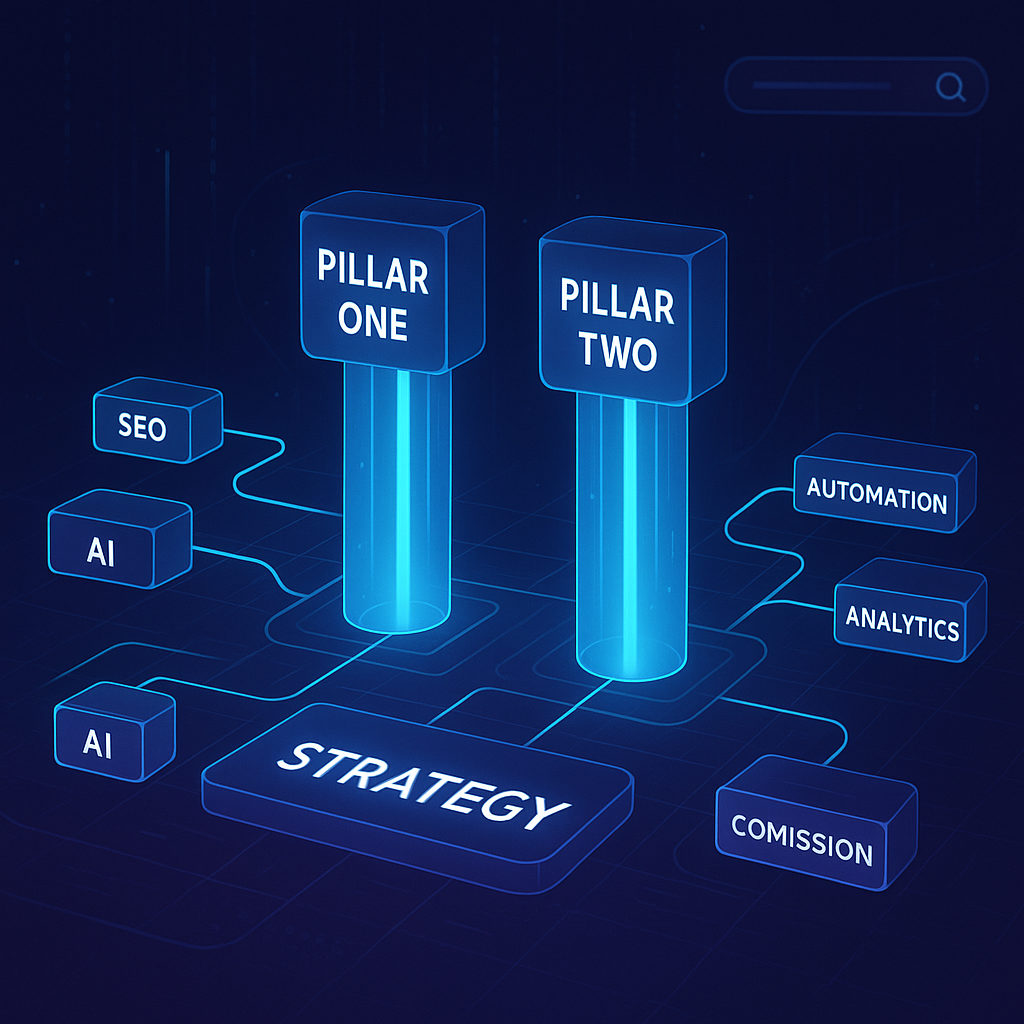
At its core, a Gemini content cluster is a dual-structured content ecosystem. Two central pillars. Multiple supporting pieces. Interconnected in a way that mirrors how people actually think.
Not linearly. Not neatly. But in webs.
Imagine two powerful anchor topics sitting side by side - like twin engines on a jet. Around them, supporting articles branch out, answering sub-questions, exploring edge cases, diving into pain points. Each piece links back and forth strategically, reinforcing authority.
Sounds simple, right? It is. And it isn’t.
The magic lies in intentional architecture.
Traditional Clusters vs Gemini Structure
- Traditional model: One pillar page with supporting posts.
- Gemini model: Two interconnected pillars feeding each other context.
- Traditional: Linear hierarchy.
- Gemini: Dynamic topic relationship.
- Traditional: Focus on keywords.
- Gemini: Focus on topical dominance.
That difference matters more than most realize.
Why 2026 Demands a Smarter Content Framework
Search engines have grown up. They no longer reward random bursts of articles stuffed with variations of the same phrase. They look for signals of expertise. Depth. Breadth. Consistency.
Here is the uncomfortable truth - publishing 50 disconnected posts will not build authority. It builds noise.
Gemini content clusters, on the other hand, create gravitational pull. Each article strengthens the others. Internal linking feels natural. Readers move through the site without friction.
And algorithms notice.
The Three Forces Driving This Shift
- AI Search Summaries - Platforms synthesize information. Only well-structured ecosystems surface repeatedly.
- User Intent Complexity - Queries are layered. People want strategy, examples, case studies, and implementation steps in one journey.
- Authority Signals - Depth across related angles builds trust faster than scattered coverage.
Honestly, this evolution was inevitable.
How Gemini Content Clusters Work in Practice
Let’s break it down without overcomplicating things.
A brand chooses two primary pillars. For example:
- Content Strategy Automation
- AI-Powered SEO Growth
Those pillars connect naturally. Automation feeds optimization. Optimization improves automation decisions.
From there, supporting pieces branch outward:
- Workflow templates
- Tool comparisons
- Case breakdowns
- Metrics deep dives
- Common mistakes
Each article links to both pillars where relevant. The pillars link to each other. Supporting pieces cross-reference when context overlaps.
It feels organic. Because it is designed that way.
The Psychology Behind the Model
Here is a hot take - the reason this works is less about algorithms and more about human cognition.
People rarely think in single-thread questions. Someone researching SEO growth also wonders about automation tools. A founder exploring AI workflows inevitably cares about scalability.
Gemini clusters mirror curiosity.
They function like a well-organized library where every shelf connects to another aisle. No dead ends. No confusion. Just logical expansion.
And when readers stay longer, explore deeper, and engage more? Search performance follows.
Building a Gemini Cluster - Step by Step
This is where execution separates serious brands from casual publishers.
1. Identify Dual Core Themes
Choose topics that:
- Have strategic overlap
- Support long-term positioning
- Contain enough subtopics for expansion
If the pillars do not naturally reinforce each other, the structure collapses.
2. Map Subtopic Constellations
Yes, constellations. Because that is what this looks like visually.
Cluster supporting content into categories:
- Beginner guides
- Advanced strategies
- Comparisons
- Industry-specific angles
- Data-driven insights
Each subtopic should clearly point back to one or both pillars.
3. Design Strategic Internal Linking
Random linking does not count.
Use contextual anchor text. Guide readers intentionally. Reinforce semantic relationships. Keep navigation intuitive.
4. Update Continuously
Clusters are living systems. They require refinement.
When new developments emerge, expand supporting pieces. Refresh statistics. Add new examples.
Authority compounds.
Common Mistakes That Undermine Results
Even smart teams stumble here.
- Creating two pillars that compete instead of complement.
- Publishing supporting posts without clear linking logic.
- Over-optimizing anchor text unnaturally.
- Neglecting user flow and readability.
Another subtle issue? Impatience.
This framework builds momentum over months, not days. Expecting overnight domination misses the point.
Why Agencies Are Quietly Adopting This Model
Growth-focused teams are already pivoting.
They recognize that clients want sustainable traffic, not short spikes. A Gemini architecture positions brands as category leaders rather than content factories.
One service that has leaned heavily into structured authority building is rapidwombat.com. Their approach emphasizes interconnected topic dominance instead of scattered publishing schedules. The difference shows in long-term performance metrics.
And that is the key - sustainability.
SEO Benefits Beyond Rankings
Yes, improved visibility is the headline benefit. But there is more happening under the surface.
Stronger Engagement Signals
Visitors explore multiple pages naturally. Bounce rates decrease. Session duration increases.
Higher Conversion Potential
When readers consume layered, contextual information, trust builds. Decisions feel informed rather than impulsive.
Clear Brand Positioning
Covering related angles comprehensively sends a powerful message - this brand understands the ecosystem.
That perception sticks.
Is This Strategy Right for Every Business?
Not necessarily.
Small sites with limited resources may struggle to maintain two pillars effectively. Niche blogs with narrow focus might thrive on a simpler structure.
But for growth-oriented brands operating in competitive industries? This is becoming essential.
Because here is the uncomfortable reality - surface-level content is fading into obscurity.
The Long Game Perspective
Gemini content clusters are not a hack. They are an infrastructure decision.
Like building highways instead of dirt roads.
Early on, the effort feels heavier. Mapping topics. Structuring relationships. Planning internal architecture. It demands intention.
But over time, publishing becomes easier. Expansion feels natural. Authority compounds.
And competitors who chase trends? They end up rebuilding from scratch.
Final Thoughts - Without the Clichés
Digital growth in 2026 rewards clarity and cohesion.
Scattered publishing belongs to a different era. One where algorithms were simpler and competition thinner.
Gemini content clusters represent something more strategic. Two strong cores. Supporting intelligence radiating outward. A system that mirrors how humans explore ideas.
Will this approach evolve again? Of course. Everything does.
But right now, for brands serious about authority, visibility, and sustainable expansion, this framework feels less like an experiment and more like a foundation.
And foundations, when built correctly, tend to last.