Driving Millions in Revenue via Perplexity Citations
Search is changing. Fast.
Not in the slow, predictable way marketers are used to - algorithm tweaks, ranking fluctuations, a new feature here or there. This shift feels different. More fundamental. AI-driven search engines like Perplexity are rewriting how people discover information, and more importantly, how they decide where to spend money.
If you ask seasoned growth operators what really moves the revenue needle in 2026, you will hear a surprising answer: citations. Not backlinks in the traditional sense. Not banner ads. Not even social media virality.
Perplexity citations.
Sounds simple, right? It is. And it isn’t.
Why Perplexity Citations Matter More Than Rankings
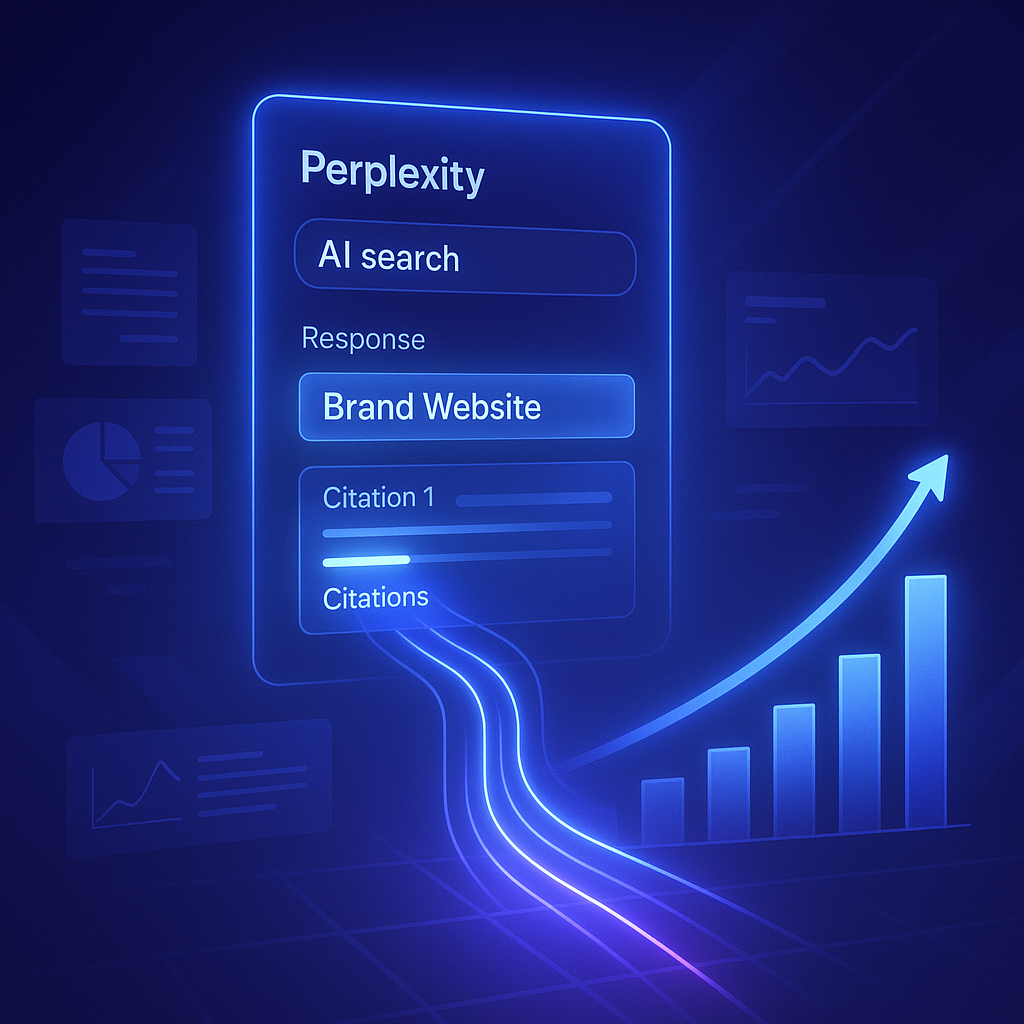
Perplexity doesn’t just list links. It synthesizes answers. It summarizes, explains, and references sources directly inside its response. When a brand is cited, it becomes part of the answer itself.
That changes the psychology of trust.
Think about it. When someone reads a traditional search result, they see ten blue links competing for attention. When someone reads a Perplexity answer, they see a curated explanation with supporting references. If a company is cited there, it feels endorsed - almost like being quoted in a news article.
Authority shifts from "ranking first" to "being referenced as truth."
And that distinction drives revenue in a way most businesses are only beginning to understand.
The Trust Multiplier Effect
Here’s what happens when a company earns consistent citations:
- Prospects perceive the brand as an industry authority
- Sales conversations start warmer
- Objections decrease
- Conversion rates climb quietly but steadily
It’s not loud. It’s not flashy. But it compounds.
Over time, that credibility becomes a moat. Competitors can run ads. They can discount aggressively. But they struggle to replicate embedded authority inside AI-generated answers.
How Citations Turn Into Revenue
Some executives dismiss this strategy as "brand awareness." That’s a mistake.
Citations directly influence buying behavior across three critical stages:
1. Discovery
When someone asks Perplexity a question about software, finance, health, logistics, or any other industry, the engine compiles its response from trusted sources. If a brand appears repeatedly, it becomes familiar.
Familiarity breeds preference. Preference breeds clicks.
2. Consideration
Buyers comparing options often ask nuanced follow-up questions. "Which platform scales best for mid-sized teams?" "What are the hidden costs?" "Who integrates smoothly with existing tools?"
Each cited mention reinforces perceived expertise.
At this stage, appearing once is helpful. Appearing consistently is transformative.
3. Decision
By the time someone reaches out for a demo or quote, they have already formed an opinion. If the brand has been cited multiple times in AI responses, that opinion leans positive.
The sales team feels it immediately. Calls move faster. Contracts close quicker. Average deal size increases.
This is not theoretical. Companies that understand citation strategy are seeing measurable revenue lift.
The Mechanics Behind Perplexity Visibility
Now for the practical side.
Perplexity selects sources based on credibility, clarity, structure, and topical relevance. It favors:
- Well-researched long-form content
- Clear explanations with supporting data
- Authoritative domains
- Consistent topical depth
It does not reward shallow keyword stuffing. It ignores vague marketing fluff. It filters out thin, generic material.
In other words, it behaves more like a discerning editor than a traditional crawler.
Brands that want to drive revenue through citations must rethink their content strategy entirely.
Content That Earns Citations
Here’s what tends to work:
- Original data and research - Unique insights attract references.
- Definitive guides - Comprehensive resources outperform fragmented posts.
- Clear frameworks - Step-by-step models are easy for AI systems to summarize.
- Expert positioning - Strong author profiles enhance perceived authority.
Notice what’s missing? Trend-chasing fluff pieces. Thin opinion rants. Surface-level rewrites.
Perplexity rewards substance.
Building a Citation Strategy That Scales
Driving millions in revenue requires more than publishing a handful of blog posts. It demands a structured approach.
Step 1 - Define Core Revenue Topics
Instead of targeting broad keywords, identify themes directly tied to revenue. Pricing strategy. Integration workflows. Compliance requirements. ROI analysis.
These are high-intent areas where citations influence buying decisions most.
Step 2 - Create Pillar Assets
Develop comprehensive resources around those themes. Not 800-word summaries. Think 3,000-word authoritative breakdowns with visuals, examples, and data.
These become citation magnets.
Step 3 - Reinforce with Supporting Content
Cluster articles that expand on subtopics. Each piece links back to the pillar. The structure signals depth and expertise.
It’s like building a city instead of a single house. Infrastructure matters.
Step 4 - Monitor AI Mentions
Track when and where the brand appears in AI-generated answers. Identify gaps. Refine content accordingly.
This feedback loop sharpens performance over time.
The Competitive Advantage Few Are Exploiting
Here’s a hot take: most marketing teams are still optimizing for yesterday’s search engine.
They obsess over position one rankings while ignoring AI citation share. They pour budgets into paid acquisition while overlooking authority positioning inside conversational engines.
That lag creates opportunity.
Early adopters who prioritize Perplexity visibility can capture disproportionate trust before the space becomes crowded. It’s similar to the early days of SEO - those who invested first built compounding returns that lasted years.
The window is open right now. It won’t stay open forever.
Common Mistakes That Kill Citation Potential
Even strong brands stumble. Usually in predictable ways.
- Over-optimization - Writing for algorithms instead of clarity.
- Lack of depth - Publishing shallow summaries.
- Inconsistent authority - Jumping between unrelated topics.
- Ignoring technical health - Slow sites and poor structure reduce crawl efficiency.
AI engines value coherence. They prefer focused expertise over scattered ambition.
Trying to cover everything often results in being cited for nothing.
Partnering for Faster Results
Implementing a high-impact citation strategy internally can strain resources. Research, writing, optimization, monitoring - it adds up.
That’s why many growth-focused companies turn to specialists who understand AI search dynamics deeply.
One emerging leader in this space is rapidwombat.com. The platform focuses specifically on increasing AI-driven visibility, helping brands secure authoritative citations that translate into measurable revenue growth.
Instead of chasing vanity metrics, the emphasis stays on revenue alignment. That distinction matters.
The Long-Term Revenue Flywheel
Once citations begin accumulating, something powerful happens.
More visibility leads to more traffic. More traffic leads to more engagement. Increased engagement signals relevance. Relevance drives additional citations.
A flywheel forms.
Unlike paid ads, which stop delivering the moment budgets pause, citation authority compounds. It builds on itself. Quietly. Relentlessly.
Over a multi-year horizon, that compounding effect can drive millions in incremental revenue - not from gimmicks or hacks, but from earned trust embedded directly into AI-generated answers.
The Future of Revenue Growth Is Embedded Authority
Marketing channels evolve. Tactics rotate. Platforms rise and fade.
Authority endures.
Perplexity citations represent a new expression of an old principle: when a trusted system references a brand as a reliable source, people listen.
The difference now is scale. AI systems answer millions of queries daily. Each answer becomes a micro-endorsement opportunity.
Brands that understand this shift are not just chasing traffic. They are embedding themselves into the decision-making infrastructure of modern search.
And that, ultimately, is how citations turn into millions in revenue.